
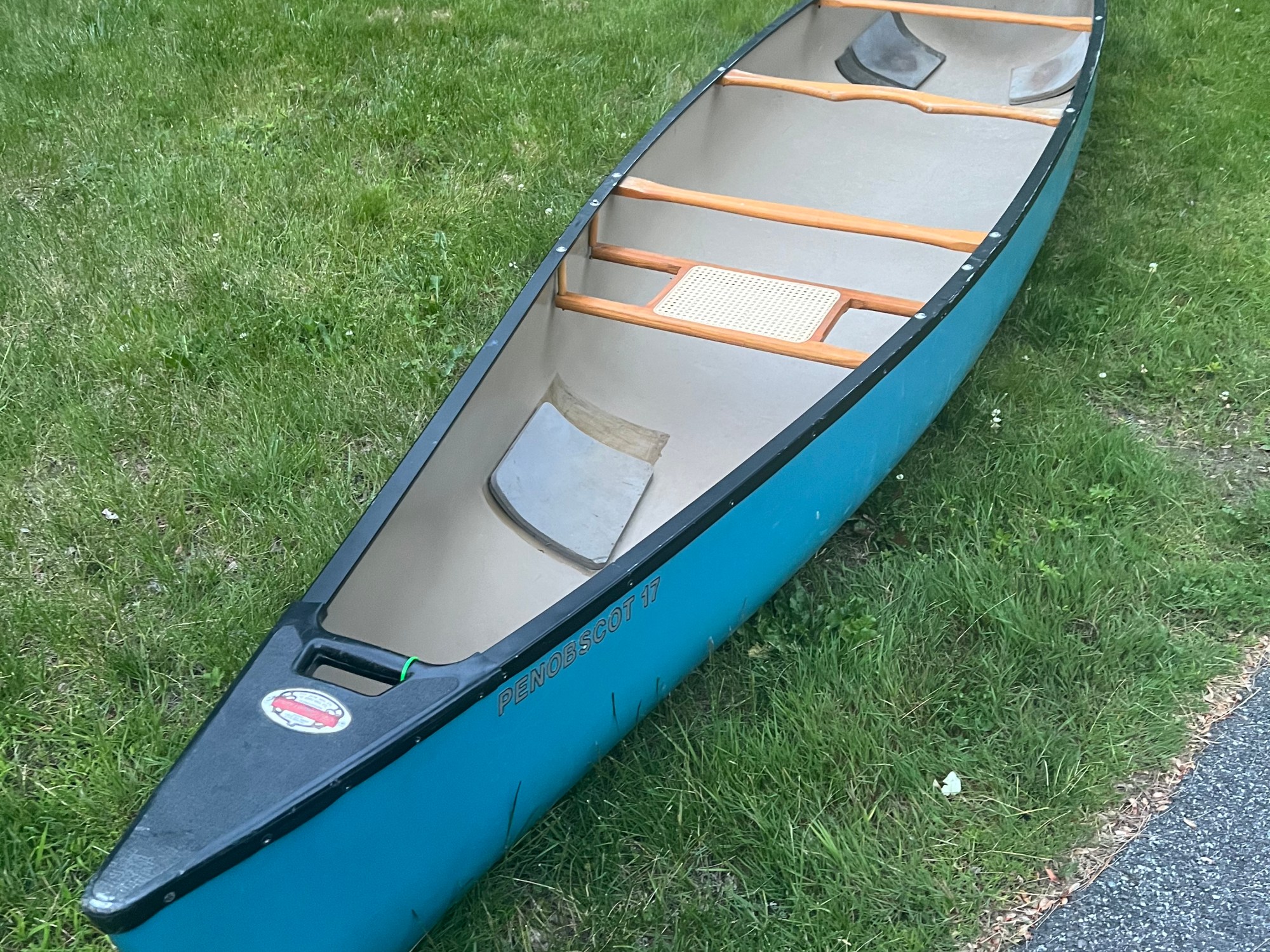
I was recently reminded once again of just what a versatile and capable machine is a scooter. I am fortunate to own a classic Old Town Penobscot 17 canoe, vintage 1990s, which late last summer suffered the misfortune of having someone’s knees (okay, mine!) break through the cane on the seats. The result was a crater-sized hole in each of the seats, which necessitated bringing along stadium seat cushions to every paddle or else risking pinching one’s posterior in the broken cane (truly sub-optimal). So about a month ago I undertook an online search for someone to repair these seats and found my way to Kelly Tillinghast of Conservation Caning.
Tillinghast, by the way, is related by marriage to the great 19th-century American golf course designer A.J. Tillinghast (which is neither here nor there, but I found it an interesting tidbit!); and she believes in repairing and re-using old or damaged furniture, lawn chairs and — fortunately for me — canoe seats, instead of throwing them out and buying new. She kindly made room in her schedule to fix my busted cane seats, and she turned the project around in only a week. This meant for me a lovely scooter ride southeast through Lisbon to coastal Yarmouth, Maine, where we agreed to meet at the Yarmouth Public Library so I could retrieve the seats.
Incidentally, whether you have a need for caning services or not, I encourage you to visit the Conservation Caning website (https://www.conservationcaning.com), which contains a wealth of information on the subject and many beautiful photos of furniture projects which Kelly has completed. Kelly herself is extremely knowledgeable about cane and caning — I was surprised to learn from her that cane is made from rattan (mostly sourced from China and now like so many things inexplicably subject to capricious and costly tariffs), and that it does in fact become brittle over time (which explains how I was able to put my knee through the seat). Apparently it can stretch with use, but a good soaking will restore its original tautness. And it will darken over time –which is why Tillinghast offers to stain the repaired cane, in the event that you have an old piece of furniture to repair, upon which new cane would look out-of-place. Furthermore, cane apparently needs to “breathe”, which is why she sealed the top surface of each seat but left the underside untouched.
But anyway, to my original point! I could have driven my small truck to Yarmouth, fifty miles one way at 24MPG, and thrown the canoe seats into the back — or I could save money, take the scooter at 59MPG and bungee them to the seat behind me. Complete no-brainer!

Didn’t Kelly do a beautiful job?!! Here’s a picture of the complete bike with seats:

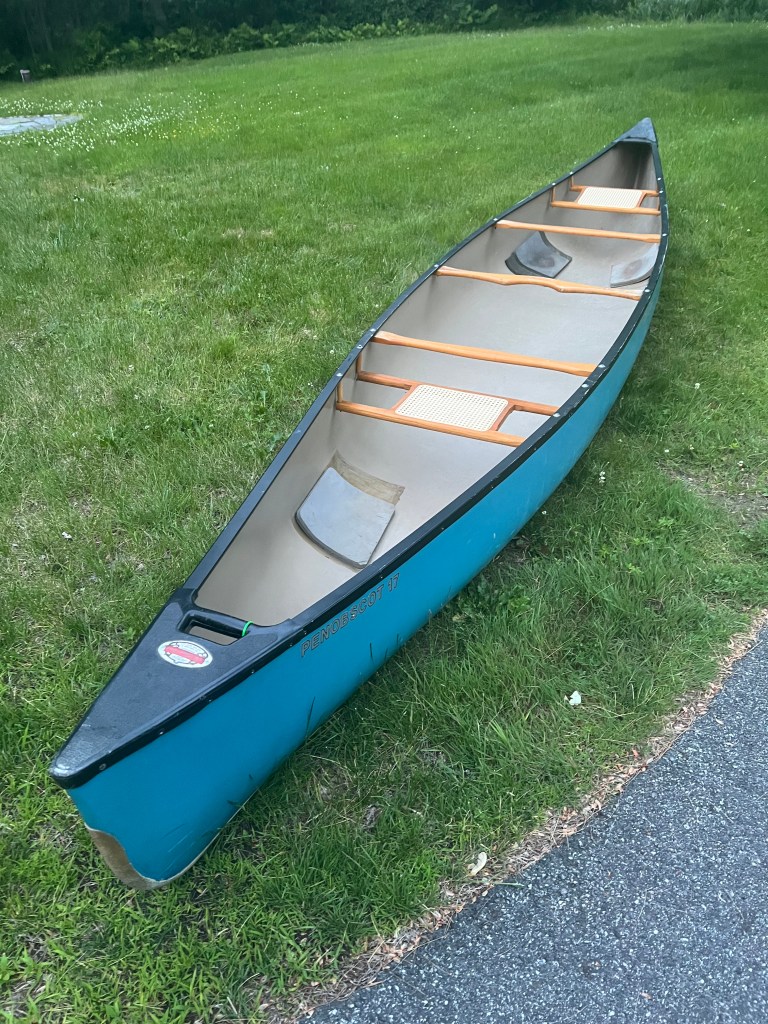
And here’s the canoe with the new cane seats installed, looking like new!
So — a lovely ride down along the Androscoggin River on ME-136 to Freeport, then a short jaunt on I-295 to Yarmouth and back, and I had my new canoe seats. Practical, economical and fun — you just can’t beat a scooter!

 scootersmaine
good job, John. I wish I had known about her skills a couple of years ago.
I just had an old Lincoln rocker my folks had purchased over 50 years ago at the Peakes estate auction late 1970s.
Just got it back after it was completely dismantled, put back together, refinished and caned. Helen
LikeLike